How to Apply for an India Tourist e-Visa: Eligibility, Fees & Steps
Updated: April 16, 2026
The Indian e-Tourist Visa offers a convenient and hassle-free way for travelers to enter India for tourism purposes. The online application system and electronic approval eliminate the need for embassy visits and extensive paperwork. However, applicants must understand the requirements and provide accurate information to avoid delays or rejection.
As a reliable visa service provider, we guide travelers through every step of the application process, including eligibility verification, application review, and submission. This guide contains easy-to-understand information about the Indian e-Tourist Visa process, which will enable you to apply with ease and visit India without any hassles.

You can apply for the Indian e-Tourist Visa through our online visa application system
What is an Indian E-Tourist Visa?
The India e-Tourist Visa is an electronic travel authorization that allows eligible foreign nationals to enter India for tourism purposes. Instead of visiting an Indian embassy or consulate, travelers can submit their applications online and receive their approved e-Visa via email. This visa is suitable for sightseeing, visiting friends or relatives, short-term recreational trips, and cultural exploration.
India E-Tourist Visa comes with various validity periods, such as 30 days, one year, and five-year visas, and each has different stay and entry restrictions. Travelers can enter India through designated international airports and approved seaports, which means that it is a convenient and time-saving solution that tourists who want to visit India can choose.
Eligibility for India Tourist e-Visa
Nationalities Eligible for the India Tourist e-Visa
The India Tourist e-Visa is accessible to the citizens of most nations in the world. The nationalities are eligible, and they can apply online without having to visit an Indian embassy or even a consulate. But this is subject to eligibility based on bilateral agreement, and therefore, before an applicant can apply for the India Tourist e-Visa, they should ensure that their nationality has been approved.
Passport Requirements
Applicants must hold a passport valid for at least six months from the intended date of arrival in India. The passport must be in good condition and suitable for international travel, where immigration stamps should be put. Temporary, handwritten, or damaged passports are not accepted for the India Tourist e-Visa.
Age and Travel Purpose Conditions
The India Tourist e-Visa does not have a particular age restriction with respect to the application. Minors should possess a different e-Visa. The intent of traveling should be purely tourism, sightseeing, visiting friends or family, or recreational activities that will be temporary.
Who Is Not Eligible for an e-Visa
Individuals intending to work, study, conduct business, or stay long-term in India are not eligible for the India Tourist e-Visa, and travelers arriving in India through land boundaries are not covered under the India Tourist e-Visa.
What Countries are Eligible for Indian e-Tourist Visas?
Citizens of many eligible countries and territories may apply for an Indian e-Tourist Visa before arrival, including America, the United Kingdom, Australia, New Zealand, Canada, etc.
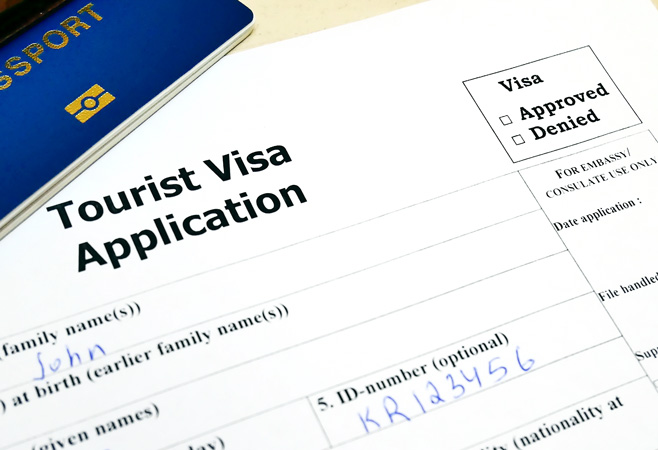
The applicants can check the complete list of eligible countries for the Indian Visa to know whether their country is among those listed
Which Indian Entry Points Accept e-Tourist Visas?
The eTV (India Tourist e-Visa) has validity in entering the country via specific international airports and seaports of India. Entry is permitted through designated international airports and approved seaports in India, without going to an embassy or a consulate.
The India Tourist e-Visa application process is simple and fully online. Before traveling, the applicants are just required to fill in the online form and forward the necessary documents, and the approved visa would be sent to them via email.
In order to make the application process smooth, it is advisable that travelers apply online beforehand and thoroughly consider the entry requirements prior to arriving.
Types of India Tourist e-Visa Explained
The Government of India is providing various Indian Tourist e-Visa types in order to match various travel plans and times. The visa types differ depending on the period of stay, validity, and entry terms, and the traveler has an opportunity to use the variant that suits them better.
- The 30-day India Tourist e- Visa is for short tourism. The 30-day India Tourist e-Visa becomes valid from the date of grant and allows double entry. Travelers are able to spend up to 30 days, which is perfect when they want to spend a short holiday, see sights, and see friends and relatives.
- A one-year India Tourist e-Visa would be appropriate when the traveler intends to make several visits to India in a year. This visa is considered to be valid for 12 months after the issue date, and it gives multiple entries. Every visit allows up to 90 days of stay, depending on the nationality of the applicant.
- India Tourist e-Visa for five years is also aimed at the high-frequency traveler who wants to have extended flexibility. This visa is multiple-entry and valid for up to five years from the issue date. Each visit is generally limited to a maximum stay of 90 days, depending on nationality.
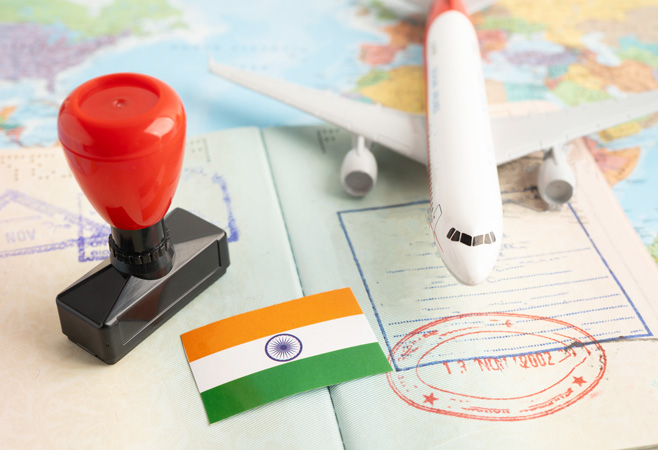
The Indian government updated the e-tourist visa policies to promote tourism in India for all eligible countries
India Tourist e-Visa Requirements: Eligibility, Documents, and Rules
To apply for an India Tourist e-Visa, applicants must meet specific eligibility conditions and submit accurate information through the official online application system. Meeting the correct requirements would prevent delays, rejection, or even complications in travelling. The India tourist visa requirements, including the documents needed for the India tourist visa, are clearly outlined below and listed in a tabular format so as to be easily referred to.
- Valid Passport
The applicants should possess a passport valid for at least six months from the date of arrival. The passport should be in proper condition, and it should not be damaged. It is not necessary to provide any extra passport pages or physical documents. - Digital Passport-Style Photograph
An online application demands a digital color photograph that is of recent date. The background of the photo should be plain, with the full face of the applicant clearly visible, as well as complying with the official Indian e-Visa photo requirements. Granted access to applications may be rejected due to the use of accessories or the poor quality of the image. - Documents Required for India Tourist Visa
The Indian visa system on the e-Visa program only needs a scanned copy of the passport bio page and a compliant digital photograph. There are no other supporting documents that are needed during the application stage, like flight tickets, hotel bookings, invitation letters, and travel itineraries. - Permitted Travel Purpose
Applicants must ensure that their purpose of travel is strictly for tourism. This may involve sightseeing, leisure travel, or a visit to friends or relatives. The Tourist e-Visa does not permit activities such as employment, business, or academic study. - Approved Entry Points
India Tourist e-Visa holders must enter India through designated international airports or approved seaports authorized for e-Visa entry. The use of an e-Visa does not include entry through land borders. - Accurate Online Application Information
All personal, passport, and travel details entered in the online application must exactly match the information shown on the passport. Mistakes in names, passport numbers, or personal information could result in visa denial or problems at immigration.
How to Apply for an India Tourist e-Visa
Obtaining an India Tourist e-Visa is a fully online process designed to simplify travel to India for international visitors. Travelers are able to fill out their application easily by taking the right steps, giving the right information, and getting authorization before traveling.
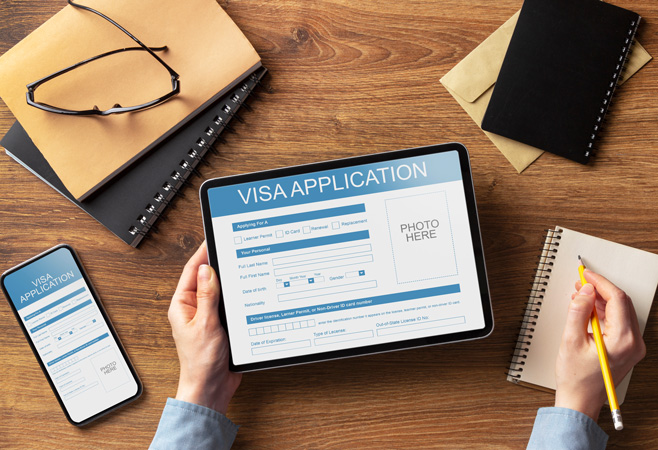
The Indian government’s online e-Visa portal can be used to apply for tourist visas, business visas, and visas for medical treatment and attending conferences
Step 1: Complete the Online Application Form
Applicants for an Indian Tourist e-Visa must complete the application form online, where they are required to give basic details about themselves and also their travels. These are the full name, date of birth, nationality, passport numbers, and the planned dates of travel. All information must exactly match the details shown on the passport to prevent processing problems and rejection.
Step 2: Pay the Visa Fee
Once the applicant fills in the form, including a scanned copy of the passport bio page and a digital passport-style photograph. After uploading the documents, the applicants will have the option of paying the e-Visa fee through the available secure online payment methods. To have the application processed, the payment is required to be made.
Step 3: Receive the India Tourist e-Visa Approval
After the application and payment are submitted, Indian authorities will process the e-Visa.TheIndia Tourist e- Visa will be sent to the applicants through email. It is essential to check your email, spam, or junk mail regularly to update or get a new request when processing.
Step 4: Travel to India and Complete Immigration Formalities
Upon arrival at an authorized airport or seaport, travelers must present a printed copy of the approved e-Visa along with their valid passport. The immigration officer will authenticate the e-Visa and stamp the passport. Once this is done, the travelers are allowed to enter India as tourists.
Indian Tourist Visa Processing Time
The Indian tourist visa processing time typically takes between 3 and 5 working days from the date the online application is successfully submitted. In the majority of cases, the applicants will get their approved e-Visa within this period, provided they provide all necessary information and documents correctly.
The processing times, however, can change in relation to the application volume, nationality, accuracy of submitted details, and Indian public holidays. Applications that need further verification or correction can take longer than the normal processing time.
In order to prevent time wastage, it is recommended that applicants be advised to apply at least one month before their planned travel date and that all the uploaded materials should be appropriately submitted per the official requirements.
Applying online is a fairly painless process, and it will save you hours compared to applying in person at an embassy or through a visa agency
How Early Can I Apply for the Indian e-Tourist Visa?
An India e-Tourist Visa can be applied for by applicants of any eligible country online, a minimum of 4 days before their planned arrival date in India. Travelers are expected to choose an Expected Date of Arrival during the application process, which is used for visa processing purposes.
The allowable arrival time depends on the category of e-Tourist Visa one has been granted and is computed based on the date on which the visa was granted, as opposed to the application date. In case of a 30-day e-Tourist Visa, the traveler has to arrive in India within 30 days of the granting date. In the case of one-year and five-year e-Tourism Visas.
An example is that an e-Tourist Visa with a period of 30 days granted to a tourist on October 1st, 2025, can enter India any time between October 1st and October 30th, 2025. When there is a one-year or five-year e-Tourist Visa issued on the same date, the allowed date of arrival would be between October 1st, 2025, and January 28th, 2026.
It is also recommended that applicants apply many days before the travel date so that they have enough time to be processed and so that the date they want to arrive at does not exceed the entry allowance period.
Entry Rules for India Tourist e-Visa Holders
The visa holders with an India Tourist e-Visa are expected to abide by certain entry regulations at the time of arrival in India. Understanding these regulations helps ensure a smooth immigration process and avoids unnecessary complications.
India Tourist e-Visa holders may enter India only through designated international airports or approved seaports authorized for e-Visa entry. The e-Tourist Visa program does not permit land border entry.
The applicants are required to bring a printed version of the approved India Tourist e-Visa and the same passport that the applicant applied for. Immigration officers will verify the e-Visa and place an entry stamp in the passport upon arrival.
The e-Tourist Visa is only for tourism, such as visiting friends or relatives, leisure, or sightseeing. Under this type of visa, all types of activities regarding employment, business, journalism, or long-term study are prohibited.
The length of stay and the number of allowed entries are determined by the nature of the India Tourist e-Visa issued. Tourists need to make sure that they do not spend more than the allowed time per visit. Overstaying an e-Visa may result in penalties or restrictions on future travel to India.
Adherence to such entry requirements guarantees legal entry and trouble-free travel in India.
Can the India Tourist e-Visa Be Extended or Converted?
Generally, the India Tourist e-Visa cannot be extended or converted when the traveler is in India. This type of visa is given on a short-term basis with the intention of tourism purposes, and short-term stays only.
The Indian Tourist e-Visa holders are required to depart India within the maximum permitted duration of stay indicated on their e-Visa as indicated on their e- visa. Overstaying may lead to penalties, additional exit formalities, or complications in future Indian visa applications.
Within India, the Tourist e-Visa is not generally convertible to another visa type, e.g., an employment, business, student, or long-term residence visa. Tourists who want to spend more time or do other activities that are not allowed in a Tourist e-Visa are usually expected to leave India and seek the relevant visa in an Indian embassy or consulate abroad.
Under unusual and extraordinary conditions, like in cases of medical emergency, or when the traveler cannot do anything about the situation, travelers may be advised to contact the Foreigners Regional Registration Office (FRRO) for guidance. In such situations, any consideration is handled strictly at the discretion of Indian immigration authorities and does not guarantee approval.
To prevent the problems with immigration, travelers are highly recommended to choose the type of visa they should enter the country with and plan their stay according to the India Tourist e- Visa rules.

In general, the Indian government does not allow extensions or renewals of Tourist e-Visas
How Much Are India Tourist e-Visa Fees? A Complete Guide
Applicants for an Indian visa should know that the overall expenses are normally subdivided into two distinct categories of charges, namely the government charges and service charges. The understanding of these charges is useful to travelers to be able to plan their budget and avoid confusion during the application process.
Government Fees
Government fees refer to fixed charges, which are imposed by the Government of India. The cost varies depending on the visa type, visa validity, and the applicant’s nationality. All applicants pay government fees, which are used to cover the official processing and issuance of the visa. Government fees are usually non-refundable to an individual, even in the event that the visa application is denied or withdrawn.
The Visa fee is the fee set by the Government of India for issuing an electronic visa
Service Fees
Service fees vary depending on the level of support provided and the processing speed selected. Service fees, unlike government fees, are set by the service provider and may vary across agencies. Service fees are outlined in the table below.
Visa type | 1 person | 2 people | 3–5 people | 6–9 people | 10 or more people | Urgent |
e-Tourist Visa (double entries for 30 days) | US$ 69 | US$ 67 | US$ 65 | US$ 62 | US$ 55 | Plus US$ 79 |
e-Tourist Visa (multiple entries for 1 year) | ||||||
e-Tourist Visa (multiple entries for 5 years) |
The processing speed selected also affects the total visa cost. We offer the following processing options:
- Normal: It takes 5 working days to process your visa
- Urgent: Receive your visa in 2 working days
To get to India, it is possible to plan your trip by preparing the necessary services beforehand, which will help make this process easier. Travel insurance is highly advised in order to take care of possible medical emergencies, disruptions of your trip, and unforeseen costs during your stay.
Also, a travel eSIM will allow you to be connected once you arrive, and you can access maps and ride-hailing apps, as well as online services, without purchasing a physical SIM card.
Conclusion
The India Tourist e-Visa is the simplest and most effective method of traveling to India to tour and make short visits. With a fully online application process, simple requirements, and quick processing possibilities, travelers are able to spend less time and eliminate redundant paperwork.
You can make the process of traveling to a new place with no stress by getting the necessary documents ready, knowing the visa costs, and making the application in time. Travelers are encouraged to apply for their Tourist e-Visa well in advance of their planned travel date. If you are planning a trip to India, applying for your India Tourist e-Visa in advance will help ensure a smooth and stress-free travel experience. Begin your application and become ready to discover India’s rich culture, iconic sights, and memorable moments without any hesitation.
Check Out What’s In India