
The Ultimate Guide to Securing Your Indian e-Medical Visa: Eligibility, Documents & Fees
Updated: April 16, 2026
The India e-Medical Visa allows foreign nationals to travel to India for medical treatment at recognized hospitals and medical institutions. The entire application process is completed online, eliminating the need to visit an embassy or consulate. Once approved, the visa is sent electronically via email.
Depending on the treatment plan, the Indian e-Medical Visa allows multiple entries within the period of its validity. In this guide, travelers will find essential information on eligibility, required documents, application procedures, and key rules for a successful medical trip to India.
What is an Indian e-Medical Visa?
An Indian e-Medical Visa is an electronic visa issued to foreign nationals who intend to travel to India for medical treatment.It enables patients to get the services of the recognized hospitals and medical institutions in the country without necessarily visiting the Indian embassy or consulate personally.The applications are fully processed online, and the granted visa is sent electronically via email.
This visa is intended for patients seeking surgeries, specialized treatments, or long-term medical care in India.The Indian e-Medical Visa is normally issued for a short term, and it may permit multiple entries based on the medical need.To prove that they are going to India for medical purposes, the applicants are required to furnish pertinent medical details, such as the details of the hospital or the treatment plan.

Indian E-Medical Visa is a travel authorization for eligible nationals seeking medical assistance in India available via online application
Types and Validity of the Indian e-Medical Visa
The Indian e-Medical Visa is given to foreigners who want to come to India to get medical treatment at the established hospitals or medical facilities.It is a separate type of electronic visa and must not be confused with the Indian e-Medical Attendant Visa, which is another visa.The patients and their attendants should apply separately.
The Indian e-Medical Visa is valid for 60 days from the date of first entry into India and allows triple entry during its validity period.This validity period enables the patient to make up to three entries (in and out of India) in case their medical treatment needs an extension of the treatment in the form of follow-ups or consultations.Any entry should be made within the 60 days of the period of validity, and the visa does not automatically permit an extension of stay on medical grounds.
The number of Indian e-Medical Attendant Visas that can be issued to the family members or people taking care of them is up to two.These visas generally carry the same validity period and entry conditions as the patient’s e-Medical Visa.
In genuine and exceptional medical circumstances, an extension may be requested through the Foreigners Regional Registration Office (FRRO).Any extension is under tight scrutiny by the Indian immigration authorities, with backup medical documents, and is not assured.
Who is eligible for an India e-medical visa?
An Indian e-Medical Visa may be applied for by foreign nationals of eligible countries who are planning to visit India in order to receive medical care in one of the recognized hospitals or medical institutions.
Applicants should be certified by an Indian medical institution, describing the recommended treatment or medical consultation.The e-Medical Visa is given on medical grounds and cannot be utilized for tourism, business, employment, or study.
The applicant’s passport must be valid for at least six months from the date of first arrival in India.The online application should have all the information that corresponds to the passport information.
Two possible family members or caregivers can also accompany the patient on an Indian e-Medical Attendant Visa separately.Every attendant will have to provide every application separately, and the eligibility requirements will have to be met.
The Indian e-Medical Visa does not allow treatments concerning surrogacy.
The Indian e-Medical Visa is not offered to diplomatic or official passport holders, laissez-passer document holders, or people who have international travel documents.
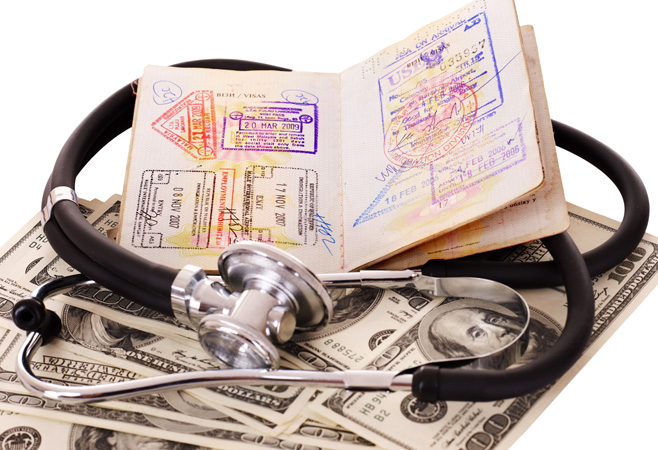
India medical visa is available to those seeking medical treatment in reputed / recognized specialized hospitals or treatment centers in India
India e-Medical Visa Requirements for Medical Travelers
Applicants have to fulfill certain eligibility requirements and provide correct details by using the available online application system to be granted an Indian e-Medical Visa.Preparing the required documents in advance helps avoid delays or refusal.
Valid Passport
The applicant must hold a passport valid for at least six months from the date of arrival in India.The application will involve a scanned copy of the bio page of the passport.
Medical Purpose Confirmation
An Indian e-Medical Visa is granted to treat patients in India. Applicants must plan to receive treatment at a recognized hospital or medical facility in India.
Hospital or Medical Letter
An Indian hospital or other medical facility should confirm it with a letter.This letter must specify the suggested medical treatment or consultation and the appointment of the applicant.
Digital Photograph
Be it an electronic visa or a traditional visa, the applicant has to provide a recent passport-style digital photograph in an official Indian e- Visa format.
Accurate Online Application
Personal and passport information typed in during the online application should be an exact copy of the information represented on the passport, or there will be postponements and denial.
Entry Through Approved Ports
Indian e-Medical Visa holders must enter India through designated international airports or approved seaports authorized for e-Visa entry.Land border entry is prohibited.
When these e-Medical Visa India requirements are met, it means that the process of application will be smooth, and the lawful entry to India will be provided to receive medical treatment.

Make sure all documents meet the required specifications to avoid delays in processing your e-Medical Visa.
How to Apply for an India e-Medical Visa
Applying for an India e-Medical Visa is a simple online process and usually takes only a short time to complete.The application process consists of four straightforward steps:
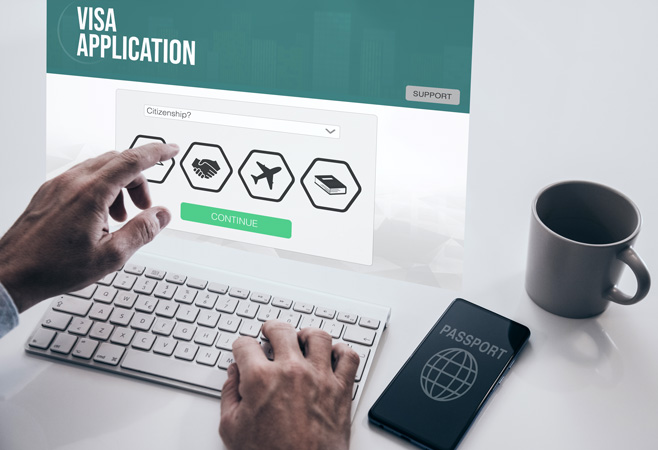
An online Indian visa application for travelers can be completed in just a few minutes
Step 1: Fill Out the Application Form
Applicants must complete the e-Medical Visa application form online.This includes providing personal details, passport information, and travel details. Applicants must also provide details about their medical treatment, including the name of the hospital or medical institution in India.All information must exactly match the passport details to avoid delays or rejection.
Step 2: Pay the eVisa Fees
When they fill out the application form, the applicants are required to pay the required eVisa fees through a secure online payment system.Visa fees may vary depending on nationality and the processing conditions.Before the application can be submitted to be reviewed, payment should be made.
Step 3: Receive the eVisa Result
After the application and payment are successfully submitted, the e-Medical Visa will be processed by the Indian immigration authorities.The approved e-Medical Visa will be sent to the applicant by email.Applicants should check their email regularly, including spam or junk folders, in the event of any updates or other requests.
Step 4: Get the eVisa Stamped
Applicants are expected to print a copy of the approved e-Medical Visa before traveling.When the travelers arrive at an authorized international airport or approved seaport, they must present the printed eVisa approval along with the same passport used during the application, which will then be checked against the visa by the immigration officials, and the passport will be stamped.
How long does it take to obtain an Indian e-Medical Visa?
Processing usually takes between 3 and 5 working days after the online application is successfully submitted.The approval of their e-Medical Visa is received by the applicants in most cases during this period, unless the applicants present incorrect information and documents.
Processing time, however, can be affected by parameters like the nationality of the applicant, fulfillment of the application, correctness of medical records, and Indian holidays.Applications that require additional verification or corrections can take longer than the usual processing time.
Travelers are encouraged to do this long before their intended date of travel and make sure that all the uploaded documents are in compliance with the requirements of the official India e-Medical Visa.
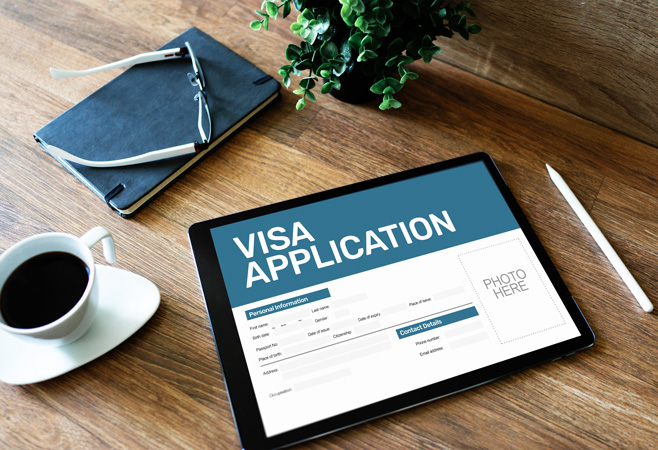
Once you submit your application, you'll get your e-visa via email.
Entry Requirements for India e-Medical Visa Holders
Approved Airports and Seaports for Entry
Indian e-Medical Visa holders must enter India through designated international airports or approved seaports authorized for e-Visa entry.With an e-Medical Visa, entry by land is not allowed.Before making travel arrangements, travelers should make sure that their port of entry is included on the official list of e-Visa-enabled airports or seaports.
Immigration Procedures Upon Arrival
E-Medical Visa holders arriving in India are required to carry a printed copy of the approved e-Visa along with the same passport used during the application.The immigration officers will check the visa information, inspect the passport, and the entry stamp indicating the lawful admission. Immigration officers may also ask basic questions about the purpose of the medical visit and the intended duration of stay.
Requirements at Indian Hospitals
Following admission, the patients should report to the identified hospital or medical institution in their application.The hospitals might demand identification documents, the e-Medical Visa copy, and medical records of the treatment.Patients have to cooperate with the process of registration in hospitals and adhere to the treatment plan provided by the medical provider.
These rules of entry will guarantee an easy immigration process and continuous medical services in India.
India e-Visa Fees: Complete Cost Breakdown for Travelers
Applicants applying for the Indian Medical e-Visa should understand that the total visa fee is divided into two separate components: Government Fees and Service Fees.All the fees are independent of each other and have a different purpose.
Knowing such a fee structure beforehand allows medical travelers to plan their budget in the right way and not mess up the application process.

The total amount you pay depends on your nationality, the visa type selected, and whether you choose standard or urgent processing
Government Fees
Government fees are governmental charges for issuing an e-Medical Visa.The fees are obligatory and should be paid as part of the official issuance of a visa.
Key points about government fees:
- The fees imposed by the government depend on the nationality.
- They are established only by Indian authorities.
- They are generally non-refundable, even if the application is refused or withdrawn.
- Government fees and service fees are separate charges and must both be paid.
It is highly recommended that the applicants should verify the exact government fee that will be charged based on their nationality during an application, since there is no fixed government fee for the India e-Medical Visa.
Service Fees
Visa service providers impose service fees on behalf of the applicants who are in need of support in the application process.These charges usually include fee payment to check the eligibility, review of the documents, application preparation, submission services, and customer services.
Below is the service fee structure for the India Medical e-Visa (triple entry, 60 days):
India Medical e-Visa – Service Fees (USD per person)
Group size | Normal processing | Urgent processing |
1 person | US$ 69 | + US$ 79 |
2 people | US$ 67 | + US$ 79 |
3–5 people | US$ 65 | + US$ 79 |
6–9 people | US$ 62 | + US$ 79 |
10 or more people | US$ 55 | + US$ 79 |
Total Cost of an Indian Medical e-Visa
The total cost is calculated as:
Total Visa Cost = Government Fees + Service Fees
Since government fees vary by nationality and service fees depend on group size and processing speed, and speed of processing influences service fees, the overall price can differ between applicants.
Processing Time Options
There are two types of processing available in the Indian Medical e-Visa:
- Normal processing: approximately 5 working days
- Urgent processing: approximately 2 working days, at a higher service cost
Processing times are approximations and can be influenced by the accuracy of the application and externalities.
Common Mistakes to Avoid When Applying
In the case of applying for an Indian e-Visa (or even Tourist e-Visa or Medical e-Visa), it is better to avoid the most frequent mistakes in order to minimize the risk of delays or refusal.The most common mistakes to be identified by applicants are listed below:
- Entering incorrect passport details
Such slight mistakes as your name, passport number, or date of birth may result in visa refusal.Always remember to make sure that all the details are the same as in your passport. - Uploading non-compliant photos or documents
Poor quality photographs, mismatched photo size, or unreadable scans of passports usually lead to processing delays or denial. - Choosing the wrong visa category
Another common error that can be made is using the e-Visa as a Tourist Visa and not as an e-Medical Visa (and vice versa). - Applying too late
The application can only take a few days before traveling, and this might not afford time to process the application, particularly during peak seasons or holidays. - Assuming visa fees are refundable
Government charges are usually non-refundable even when the visa is refused or revoked. - Not checking approved ports of entry
Use of unauthorized airports or seaports may lead to denial of entry even with a valid e- Visa.
Travel and Medical Tips for Patients Visiting India
Traveling to India for medical treatment requires careful planning to ensure a safe, comfortable, and successful medical journey.The following are the key travel and medical advice to patients who have an e-Medical Visa to India:

Explore medical tourism in India with access to leading hospitals in India & affordable treatment
Choose a recognized hospital or medical institution
Choose a well-known Indian hospital that has specialized in dealing with international patients and has sent you your medical confirmation or appointment letter.
Carry all medical documents
Carry copies of your medical records, hospital confirmation letters, prescriptions, and the granted e-Medical Visa approval to prevent delays at the immigration office or when registering at the hospitals.
Plan travel and accommodation in advance
Book flights and place accommodation near the hospital to minimise the stress of travelling, especially when the treatment you are attending requires multiple visits or follow-up appointments.
Arrange health and travel insurance
Make sure that your insurance policy will provide medical care, post-medical care, emergencies, and unexpected travel inconveniences when you are in India.
Prepare for post-treatment care
Discuss recovery time, follow-up requirements, and your readiness for international travel with your doctor before scheduling your return flight.
Stay connected and informed
Use a local SIM card or travel eSIM to maintain reliable communication with hospitals, caregivers, and emergency services.
Follow hospital and local health guidelines
Follow the instructions of the hospital, be in accordance with hygiene standards, and other local health regulations that may be used to facilitate a successful recovery.
Improper planning can make medical travelers concentrate on getting well, and make the process of going to India safe and comfortable in terms of their medical trip.
Conclusion
The India e-Medical Visa is an efficient and reliable option for foreign patients seeking medical treatment in India. It enables patients to concentrate on their healthcare experience, instead of administrative practices, because its application process is entirely online, the eligibility criteria are clear, and accessing it is easy via authorized seaports and airports.
The applicants can reduce the delays and prevent the frequent errors by knowing the visa requirements, preparing the necessary documents, and making travel and medical plans in advance. Entry to India and success in a medical trip can be guaranteed through careful planning and selection of a reputed medical organization, and by complying with Indian immigration and visa regulations.
Check Out What’s In India