Navratri Festival in India: A Nine-Night Celebration of Faith and Culture
Updated: April 16, 2026
India is often referred to as the “land of festivals,” where spirituality, tradition, and community life blend seamlessly throughout the year. The Navratri festival in India is one of the most striking celebrations among the numerous festivals and holds a special place in the hearts of millions. Navratri is a sacred nine-night festival dedicated to the Divine Feminine and is celebrated as the victory of good over evil and light over darkness.
Navratri is not only a religious festival but also a time for devotion, discipline, art, music, dance, and community coming together. The festival takes on different cultural forms across regions of India; it is one of the most diversified and spiritually significant festivals in the country.
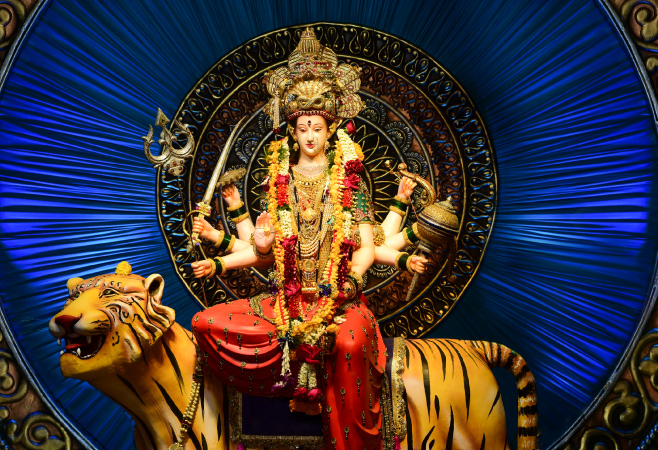
Experience the vibrant spirit of Navratri across India
Complete Information About Navratri Festival in India for First-Time Visitors
What is the Navratri Festival in India?
The word “Navratri” comes from Sanskrit: “nav” (nine) and “ratri” (nights). Thus, the literal meaning of Navratri is Nine Nights. The festival lasts for nine nights and ten days, during which devotees worship Goddess Durga and her various forms.
It is a festival representing the cosmic war of the goddess Durga against the demon Mahishasura. Hindu mythology states that Mahishasura was a powerful demon, and he could not be defeated by any man or god.
To restore balance in the universe, the divine forces created Goddess Durga, a mighty female deity who engaged Mahishasura in combat over a period of 9 days and eventually overpowered him on the 10th day, which is termed as Vijayadashami or Dussehra.
Therefore, the Navratri festival in India symbolizes the success of good (dharma) over evil (adharma), which supports moral values and spiritual power.
When Is Navratri Festival Celebrated?
Navratri is actually observed a number of times each year, but the biggest and most famous one is the Sharad Navratri in the months of September or October, during the Hindu month of Ashwin. The Navratri culminates in Dussehra, followed by Diwali in most regions.
The celebration of another important Navratri is the Chaitra Navratri, which takes place in March or April and is the start of the Hindu New Year in certain states.
Despite the four Navratris in the Hindu calendar each year, Sharad Navratri is the most significant and grand in all of India.
Key Dates for Navratri Festival 2026 Celebration
Navratri is a major Hindu festival in India, which is celebrated over a period of nine nights and ten days in honor of the goddess Durga. The Sharad Navratri, which is the most common of all the Navratri, will be held in October 2026.
Here are the confirmed dates for Sharad Navratri 2026:
- Start Date (Day 1 - Pratipada): Sunday, October 11, 2026
- End Date (Day 9 - Navami): Monday, October 19, 2026
- Vijayadashami / Dussehra (Day 10): Tuesday, October 20, 2026
The festival starts with Ghatasthapana (Kalash Sthapana), a significant ceremony typically performed on the first day in the morning. The devotees pray every day, fast, and attend cultural activities during the nine days.
Navratri is based on the Hindu lunar calendar and therefore, exact auspicious times (muhurat) can change according to the city and local Panchang.
Certain puja timings of a specific place in India can be verified individually, in case of necessity.
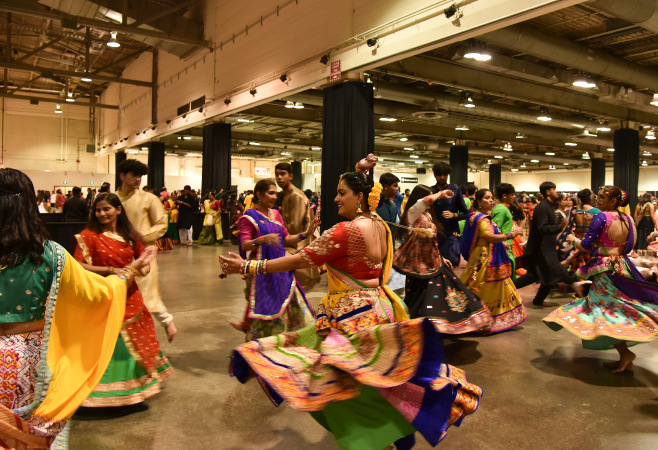
Navratri is not just a festival; it's a profound spiritual journey and a dazzling cultural spectacle for millions of devotees in India
History of Navratri Festival in India: The Story of Goddess Durga's Victory
The Navratri festival in India is entrenched in ancient Hindu mythology, scriptures, and spirituality. The festival is mainly a celebration of how the goddess Durga conquers the demon Mahishasura. The Markandeya Purana says that Mahishasura was a powerful demon that no man or god could win over. The divine mighties of Brahma, Vishnu, and Shiva united in order to balance the universe and create Goddess Durga. A battle ensued, and in a battle that lasted nine days and nights, Durga triumphed over Mahishasura on the tenth day, which is referred to as Vijayadashami, and this marks the victory of good over evil.
Other mythological events are also associated with Navratri:
- The worship of Lord Rama before his victory over Ravana.
- Adoration of the feminine energy of the Gods (Shakti)
- Seasonal transitions mark important agricultural cycles.
In the past, Navratri transformed from a religious celebration to a large-scale cultural festival in India. Major traditions in different parts of the country, like Durga Puja (West Bengal), Garba (Gujarat), Ramlila (North India), emerged.
Indian culture and spirituality are still represented in Navratri today.
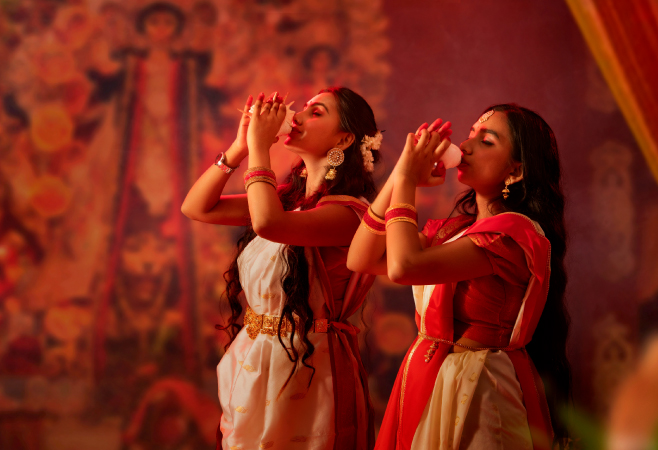
Navaratri is a festival to observe the victory of good over evil
Explore the Significance of Navratri 2026 - The Spiritual Structure of the Nine Days
Each of the nine days of Navratri is devoted to a particular incarnation of Goddess Durga, also referred to as the Navadurga. Each of the nine forms is a representation of feminine energy and spiritual growth.
Days 1-3: Goddess Durga (Power and Strength)
The first three days are devoted to the Goddess Durga, who is a representation of strength and protection. Worshipers desire to get rid of bad things and challenges in their lives. These days focus on inner cleansing and spiritual discipline.
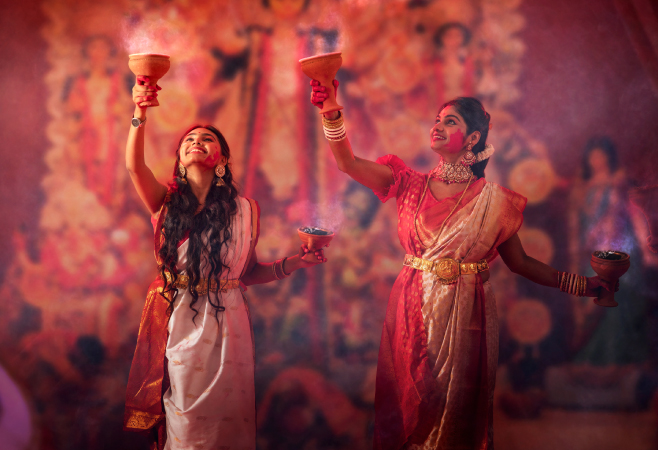
The first three days are dedicated to Durga, the next three to Lakshmi, and the last three to Saraswati
Days 4-6: Goddess Lakshmi (Wealth and Prosperity)
Days four to six are dedicated to Goddess Lakshmi, the deity of wealth and prosperity. However, prosperity here refers not only to material wealth but also to spiritual well-being and inner harmony.
Days 7-9: Goddess Saraswati (Wisdom and Knowledge)
The last three days celebrate the goddess Saraswati, who is the goddess of wisdom, art, and learning. Lots of families put books and musical instruments before the Goddess as a symbolic act of knowledge and intellectual development.
Day 10: Vijayadashami (Dussehra)
The tenth day marks the triumph of good over evil. It is celebrated in North India in memory of the victory of Lord Rama over Ravana. Ego and evil tendencies are destroyed by burning effigies of Ravana in the public grounds.
How to Celebrate Navratri Festival
Navratri is a vibrant nine-night festival dedicated to Goddess Durga and the divine feminine force called Shakti. Navratri is one of those celebrations that are observed in India with religious devotion and exuberance. To have a meaningful celebration of Navratri, this is a simple guide to the major practices and habits.
Perform Ghatasthapana (Kalash Sthapana)
The Navratri starts with the Ghatasthapana, which is a holy ritual on the first day. A clay pot (kalash) filled with water is placed in the prayer area to symbolize, which is representative of the presence of the Goddess. Religious believers also adorn the area with flowers and put a lamp to signify the onset of the nine sacred nights.
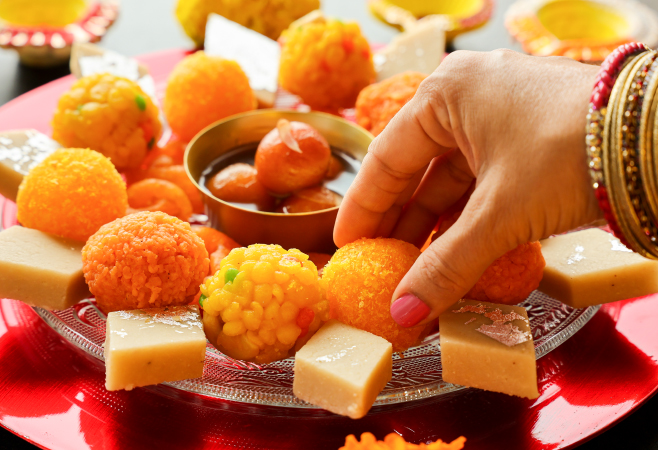
Streets adorned with colorful decorations, families gathering to prepare special dishes, and homes transforming into sanctuaries of devotion—this is a time when tradition meets joy
Observe Fasting (Vrat)
Many devotees observe fasting during Navratri as a form of spiritual cleansing. The rules of fasting can consist of not eating grains, the avoidance of onions, garlic, and non-vegetarian food. Rather, individuals eat fruits, milk, nuts, and certain special flours like buckwheat (kuttu) or water chestnut flour (singhara). Fasting is self-denial and submission.
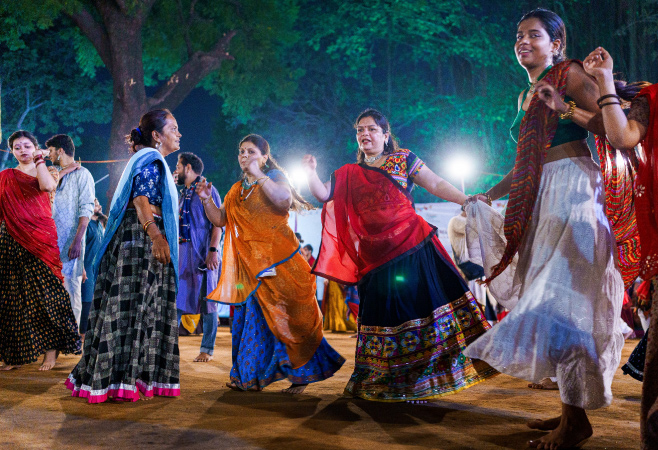
Navratri fasting works as a spiritual cleansing and devotional practice
Offer Daily Prayers and Aarti
Every day is devoted to another type of Goddess Durga. The followers chant mantras, read religious books such as Durga Saptashati, and perform morning and evening aarti. Temples are also beautifully adorned, and devotional songs bring a religious ambience.
Participate in Garba and Dandiya
Nighttime is spent dancing Garba and Dandiya Raas in states such as Gujarat. People dress in colorful traditional attire and dance in circles to devotional music. The dances are an expression of happiness, unity, and the glorification of feminine power.
Decorate Homes and Temples
The houses are decorated and cleaned and full of flowers, rangoli, and lights. In South India, families arrange dolls in a display called Golu, but in West Bengal, grand Durga Puja pandals are also established with artistic idols.
Celebrate Vijayadashami (Dussehra)
The 10th day is the triumph of good over evil. Effigies of Ravana are burned to symbolize the destruction of evil. It can also be regarded as a good day to start a new business.
Through adoration, fasting, prayers, dancing, and group meetings, Navratri emerges as an effective festival of religion, culture, and spiritual revival.
Garba and Dandiya: The Cultural Heartbeat of Navratri
Garba and Dandiya Raas are the traditional dances of Navratri that are particularly popular in Gujarat.
Garba
Garba is a group dance that is performed in a circle around a lamp or the picture of the goddess Durga. The round motion is the symbol of the life cycle and flow of energy.
Participants wear colorful traditional attire:
- Women wear a chaniya choli
- Men wear kediyu and turbans
Dandiya Raas
Dandiya is performed with decorated sticks symbolizing the swords of Goddess Durga. It is lively and joyful, and it draws both young and old.
These dances can be carried on well into the night and have become large-scale social occasions in the cities.
A Complete Guide to the Best Places to Celebrate the Navratri Festival in India
The Navratri festival in India is beautiful due to its remarkable regional diversity. Although the spiritual nature of venerating Goddess Durga has not changed, the way of celebration is so different from one state to another. This cultural diversity makes Navratri not just a religious event but also a vibrant display of Indian culture.
West Bengal – Durga Puja
Navratri is celebrated in West Bengal along with Durga Puja, which is one of the biggest festivals there. The festivity is characterized by splendid pandals (temporary buildings) designed on innovative architectural themes and well-made idols of the Goddess Durga. There is lighting of streets, and communities unite and organize cultural shows, music, dance, and theatrics. Durga Puja is more of a religious event; it is an enormous art and social event that brings together individuals regardless of their social and economic statuses. It is the most significant festival of the year among many Bengalis.
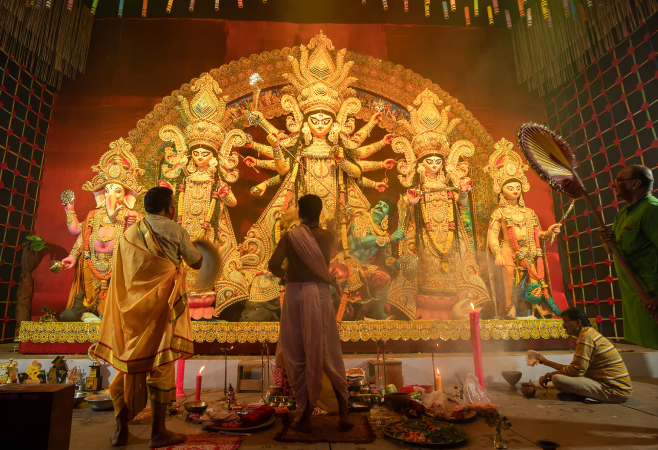
West Bengal is devoted to culture and artistry in its most exalted form
Gujarat – Dance and Devotion
Gujarat is famous worldwide for its lively Garba and Dandiya celebrations. Each night, thousands of individuals are in open grounds wearing colorful traditional clothes to dance in circles. Garba is a symbol of the life cycle and love to the Goddess, and Dandiya is a symbol of the fight of Durga with the evil powers. These dance nights are of great magnitude and exciting nature that attracts tourists all over the world. Gujarat is one of the best places to celebrate the Navratri festival in India.
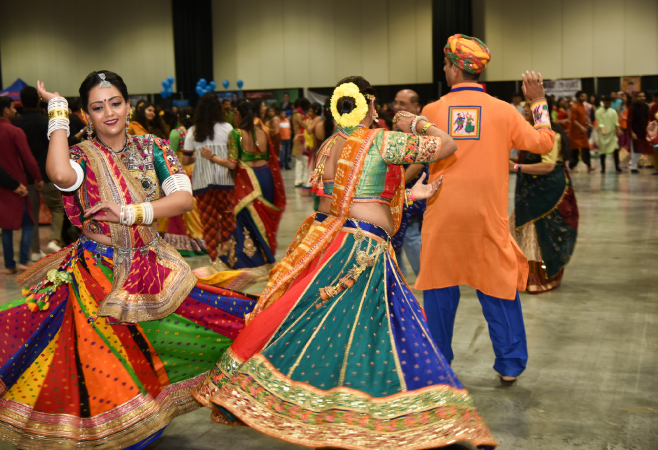
One of the biggest garba events in the world, organized by a non-profit organization during Navratri
North India – Ramlila and Dussehra
Navratri in North Indian states like Uttar Pradesh and Delhi is strongly connected with the epic of Ramayana. Ramlila is a dramatic reenactments that is performed in open grounds and tell the life of Lord Rama. The festival concludes with Dussehra, when huge effigies of Ravana are set on fire, which is a symbol of good overcoming evil. These shows attract huge numbers of people and generate a strong communal feeling.
South India – Golu Display
The standard Golu is used to celebrate Navratri in Tamil Nadu, Karnataka, and Andhra Pradesh. The dolls and figurines were placed on the stepped platforms by the families, where mythological narratives, gods, and social themes were presented. The homes are extensively decorated, and the visitors are encouraged to visit the exhibits. South Indian culture is also hospitable, devotional, and creative, as portrayed by Golu.
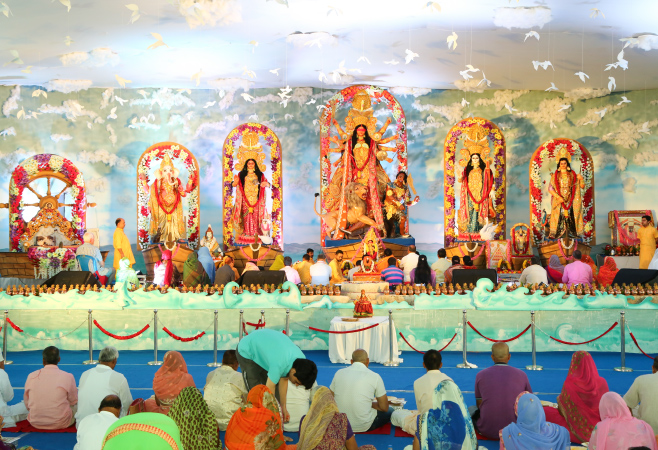
Navaratri in South India is a vibrant and multifaceted festival, deeply ingrained in cultural practices, artistic traditions, and social rituals
Traditional Food During the Navratri festival in India
Navratri is also a season of prayer and worship, as well as a season of special meals. Throughout the nine days of fasting, the devotees follow a satvik diet, that is, pure vegetarian food that is cooked without onion, garlic, and regular grains. Attention is paid to light, easy-to-digest food, which does not deteriorate spiritual discipline and sustains the energy level. Some of the most common traditional foods that are prepared during the Navratri festival in India are listed below:
Sabudana Khichdi
One of the most general foods consumed during fasting is sabudana (tapioca pearls). It is roasted using peanuts, potatoes, and light spices. It is very light but full of energy, and therefore it can be consumed when there is fasting.
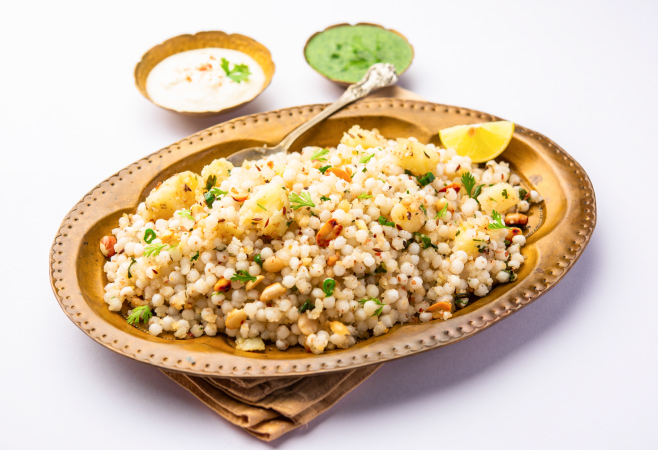
Sabudana Khichdi is a delicious, filling breakfast or meal option made with Sago pearls and a few basic spices
Kuttu Ki Puri
During Navratri, they use buckwheat flour (kuttu) in place of wheat flour. Kuttu ki puri is a bread that is deep-fried and is usually served with potato curry. It is a popular fast food in North India.
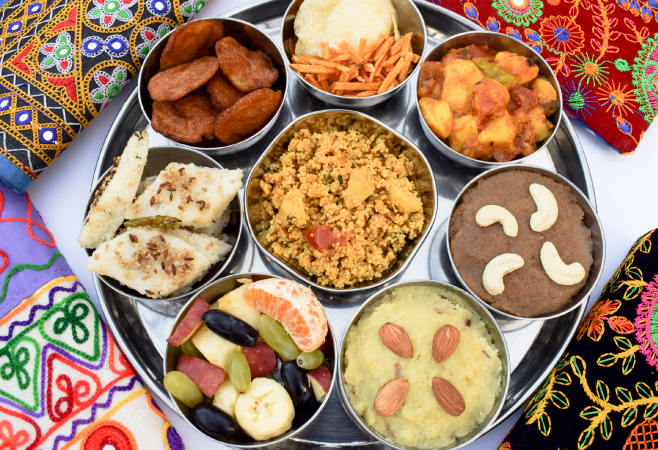
This Kuttu Ki Puri is a crisp and tasty poori made with buckwheat flour or kuttu ka atta that can be easily prepared during fasts or vrats
Singhare Ki Halwa
This sweet is made using water chestnut flour (singhara). Prepared in ghee and sugar, it is frequently served as prasad (sacred food) to the Goddess.
Aloo Tamatar Sabzi
Potatoes and tomatoes are made simply into a curry, without onions and garlic. It is not very spicy and is usually accompanied by fasting breads.
Fruit and Dairy-Based Dishes
Many of the believers consume fresh fruits, milk, yogurt, and paneer during Navratri. Fruit salads, smoothies, milk-based desserts, and sweet desserts like makhana kheer (fox nut pudding) are the popular ones.
These are the classic foods that represent the spiritual goal of Navratri: purification, discipline, and devotion, and preserve the rich Indian cuisine.
Travel Tips for Visiting India During the Navratri Festival
One of the most colorful cultural festivals in India is Navratri. In case you are planning to travel during this period, adequate preparation will enable you to have a good time in terms of the celebrations and in a respectable manner. These are some of the useful travel tips.
- Book Accommodation Early
Navratri is one of the festivals that has high attendance, particularly in cities such as Ahmedabad, Kolkata, Delhi, and Varanasi. Hotels and transport services fill up quickly. Flights, trains, and accommodation should also be reserved a few weeks before to eliminate the last-minute price hikes. - Choose the Right Destination
Navratri is celebrated differently in different regions. Go to Gujarat, where you can go to Garba and Dandiya nights; to West Bengal, where you can go to Durga Puja; or to the North, where you can go to Ramlila or to Dussehra. Research in advance to match your travel interests. - Dress Modestly and Comfortably
Navratri is a Hindu festival, and therefore, when one is visiting temples or other religious activities, they are advised to be in modest attire. Light cotton suits are very suitable, as even at the end of September-October, the weather remains hot in most of India. - Respect Local Customs
A lot of followers practice fasting and rigorous practices. Avoid bringing prohibited foods into religious spaces. Remove your shoes before entering temples and abide by local protocols. - Stay Safe in Crowded Areas
There are festival grounds and temple areas, which are very crowded. Keep your valuables locked up, watch over your shoulder, and always arrange the transport beforehand, especially after evening outings.
When done right and with cultural awareness, Navratri is a travel experience that cannot be forgotten because of all the color, devotion, music, and tradition.
Conclusion
If you're planning to experience Navratri in India, make sure to apply for your Indian e-Visa in advance via IndianImmigration.org. The application process is simple, fully online, and typically processed within a few business days—helping you travel stress-free and focus on enjoying one of India’s most vibrant festivals.
To every person who wants to get to the spiritual and cultural core of India, attending Navratri is indeed an indelible experience. In case you are visiting India over the Navratri, then be sure to take care of your Indian visa online beforehand. You can easily apply for an Indian e-Visa online in just a few minutes. Most applications are processed within a few business days, ensuring a smooth and hassle-free travel experience.
Check Out What’s In India