India Visa Extension Guide for Tourists : Everything You Need to Know About the FRRO Process
Updated: April 16, 2026
An extension of your stay in India may be necessary if your travel plans change or you require additional time beyond your original stay period. Whether visiting India for tourism, medical treatment, study, business, or work, it is essential to understand how visa extensions work to avoid overstaying and legal complications. India has specific regulations regarding which visa types may be extended, the documentation needed, and the authorities that are to be involved in the approval.
The process varies depending on the visa category and individual circumstances, and preparation is particularly critical. This guide explains the key aspects of the India visa extension process, such as eligibility, application, processing time, and tips that will help you to ensure a successful stay in India in a manner that is compliant.

If your visa is about to expire and you wish to stay longer in India, you may apply for a visa extension through the FRRO/FRO portal if your visa category is eligible. If your visa cannot be extended, you must leave India and apply for a new visa from abroad
Can You Extend Your Indian Visa?
Yes, certain Indian visas may be extended, but only under specific and justifiable conditions depending on the visa type. In this regard, visa extensions are not guaranteed and are granted solely at the discretion of Indian immigration authorities.
The majority of tourist visas, such as e-Tourist Visas, cannot be extended and have a strict timeframe of usage. The extensions are usually limited to long-term visas like medical visa, student visa, employment visa, and research visa, as long as the original purpose of stay is appropriate. Business visa extensions are granted only in rare and exceptional circumstances.
Applications for visa extensions are primarily submitted through the official FRRO/FRO online portal. The visa applicants are required to apply for their extension well ahead of the visa expiry date and ensure that they provide full supporting documents. In-person visits are required only when specifically requested by immigration authorities.
In case the visa extension is not allowed or denied, the applicant must leave India before the visa expires and apply for a new visa from abroad.
Understanding the India visa extension
An India visa extension is the official process by which a foreigner with an Indian visa can be legally allowed to stay in India after the stipulated duration of the visa. This process is strictly regulated, and extensions are granted only when there are valid and well-documented reasons.

A visa extension allows you to legally extend your permitted time in the country
Purpose of an India Visa Extension
Visa extensions may be granted for legitimate reasons, like continued medical care, academic pursuits, employment, or unusual circumstances. It does not just get approved automatically, but must be justified properly.
Who Can Apply for an Extension
Only long-term visa holders, such as employment, student, medical, or research visa holders who continue to meet visa conditions, may be eligible for an extension. Visas for tourists do not apply, with exceptions in emergencies or on humanitarian grounds.
Application Authority
All extension applications are processed online through the FRRO/FRO portal. Direct visits are required only when instructed.
Required Documents
To apply, the applicants should provide a valid passport, up-to-date visa information, evidence of the extension request, recent photos, and all other documents provided in the process of review.
Important Considerations
Overstaying without an approved extension may result in fines, deportation, or future visa restrictions. The applicants should apply early and comply fully.
Knowing how to extend the visa of India will assist the travelers to stay within the law and will ensure that the travelers do not encounter any unwarranted immigration hassle.
Types of Indian Visas Eligible for Extension
Indian visas are not all extendable. Extensions of Visas in India are not a privilege, but a prerogative of the Indian immigration officers, depending on strict conditions and reasons.

Along with a visa, the immigration law mandates the approval of immigration officials to allow a foreign national into the country
Employment Visa
Only if the foreign national continues working for the same employer, in the same role, and under valid contractual conditions. The applicant is normally forced to leave India to seek a new visa elsewhere in case of any change of employer, job role, or employment conditions. Employer sponsorship and the new employment papers are obligatory.
Student Visa
The extension of a Student Visa can only last as long as the approved academic program, as long as the student is still in valid enrollment, they comply with attendance regulations, and they do not switch institutions and courses without permission. The extensions will be confirmed by an accredited academic institution.
Medical Visa
Medical Visa can be renewed in case medical treatment in India is to be continued. The extensions are granted after submitting new medical reports by a government-recognized hospital stating that the treatment has to be extended.
Medical Attendant Visa
The Medical Attendant Visas can only be renewed in tandem with the patient's medical Visa and in the same term, assuming they are well medically justified.
Research Visa
The Research Visa can be extended in case the research project is valid and is still sanctioned by the sponsoring institution and other concerned authorities in India.
Business Visa (Exceptional Cases Only)
The extensions of Business Visa are very uncommon and are issued under extraordinary and well-justified cases. The granting of approval is entirely at will, and the majority of applicants have to leave India and seek a new visa.
Indian Visas Not Eligible for Extension
Various types of Indian visa do not usually extend. The visa holders have to depart India prior to the expiry of the visa.
Tourist Visa
Extension of Tourist Visas is practically impossible. Exceptions are considered only in extraordinary circumstances such as serious medical emergencies or force majeure events.
e-Tourist Visa (eVisa)
There is no possibility of any extension, conversion, or renewal of Indian e-Visas. At the time of expiry, travelers will have to leave India and reapply in the external country.
Entry Visa (Short-Term)
Entry Visas that are given on a short-term basis and purpose-limited are not extendable. There are certain circumstances in which the Long-term Entry Visas can be looked at independently.
Conference Visa
Conference Visas are granted for a fixed duration linked to the event and cannot be extended once the conference has concluded.
Transit Visa
Transit Visas are not extendable and allow only a short stay for onward travel.
Visa on Arrival (VoA)
Where applicable, Visas on Arrival are granted for a limited time with no extension or conversion.
Documents required for visa extension in India
Applying for a visa extension in India requires thorough preparation. Immigration authorities carefully review each application and may request additional documentation.
The applicants usually have to provide:
- A valid passport with at least six months of remaining validity.
- A copy of the current Indian visa.
- A completed visa extension application submitted through the FRRO/FRO portal.
- Recent passport-sized photographs.
- Documents justifying the reason for the extension, such as employment letters, university confirmations, medical certificates, or research approvals.
- Proof of address in India, if requested by immigration authorities.
- FRRO/FRO registration certificate (where necessary)
- Any additional documents requested by immigration officials during the review process.
Submitting complete and accurate documents significantly increases the chances of approval. It is highly recommended that the applicants strongly advise applying well before the visa expiry date.

Make sure to check with the Indian embassy or consulate for any additional requirements specific to your case.
How to Apply for an Indian Visa Extension
An Indian visa extension involves following the required procedures in order to obtain an extension of the visa. The process is handled primarily online through the FRRO/FRO portal. The only reason that warrants in-person visits is when the immigration officials request it. It is highly recommended that an applicant ensure that his/her application is submitted long before the visa expires because there is no automatic extension of the visa.
Check Your Visa Eligibility
Check to ensure that your visa category allows extension, and that you do not violate the original terms of the visa before your application. Only in case the reason for the initial intention to stay is not violated, medical visas, student visas, and employment visas may be eligible. Business visa extensions are granted only in rare and exceptional cases and are entirely discretionary. There is no general rule allowing the extension of a tourist visa and an e-visa, except in case of emergency.
Register on the FRRO Online Portal
Register on the official FRRO portal and fill out the visa extension application form properly. To prevent delays and rejection, all your personal, passport, and travel information should be a perfect match of what is available in supporting documents.
Upload Required and Supporting Documents
The applicants need to attach a valid passport, a copy of the existing Indian visa, a recent passport-sized photograph, and visa-specific supporting documents, including medical reports, university enrolment confirmation, or employer correspondence. Applicants may be required to submit additional documents during the review process.
Pay the Visa Extension Fee
The fees for visa extensions depend on the nationality, visa type, and period. All the charges are to be paid on the internet and are mostly not refundable, irrespective of the decision made on the application. Penalties in terms of overstays are levied separately.
Attend Verification if Required
Certain candidates might be requested to meet in a face-to-face session or to clarify. This is done via the FRRO portal through which such requests are made and have to be adhered to without delay.
Wait for a Decision
The time taken to process a specific visa is based on the type of visa and the complexity of the individual case. Upon approval, the visa extension is electronically given via the FRRO portal, without a physical visa sticker.
An Indian visa extension is not guaranteed and is granted solely at the discretion of immigration authorities. Early application and full and precise documentation will go a long way in enhancing compliance and decreasing the chances of punishments or immigration scams.
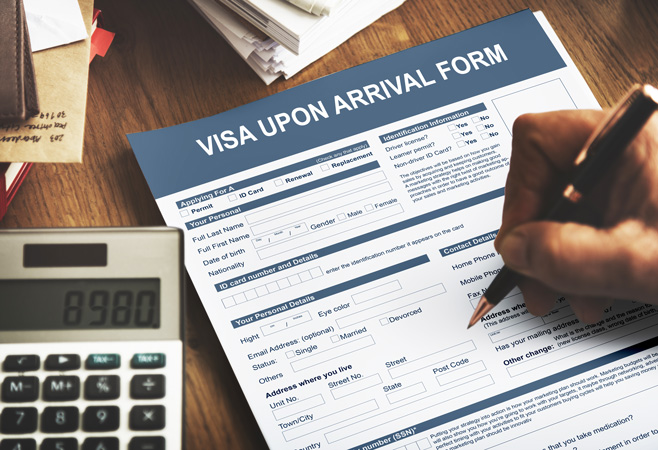
Steps to apply for an Indian visa extension
How long does it take for an Indian visa extension to be approved?
The processing time for an Indian visa extension depends on the visa type, the applicant’s individual circumstances, and the completeness of the submitted documents. India visa extensions are processed by the Foreigners Regional Registration Office (FRRO) or the Foreigners Registration Office (FRO).
In most cases, an Indian visa extension takes approximately 7 to 30 working days to process. Straightforward cases with complete documentation, such as student or employment visa extensions, may be processed more quickly. Nonetheless, those applications that need further checks or explanations can be time-consuming.
Processing time may be influenced by several factors, among which are visa type, need to extend a current visa, adherence to the stipulations of the visa, and request for supplementary documents or in-person verification by immigration authorities. Delays may also occur during peak travel seasons or public holidays.
Applicants are strongly advised to apply well before the visa expiry date to allow sufficient processing time. Submitting accurate information and complete supporting documents significantly improves the chances of timely approval.
It should be noted that overstaying without an approved visa extension may result in fines, legal penalties, or future visa restrictions. Overstaying without an approved extension may result in fines, legal penalties, or future visa restrictions. Application status should be checked on a regular basis with the help of the FRRO portal until a final decision is made.
India Visa Extension Fees for Foreigners
India visa extension fees vary based on factors such as nationality, visa type, extension duration, and purpose of stay. All visa extensions are done in the Foreigners Regional Registration Office (FRRO) or Foreigners Registration Office (FRO) in India.
There is no fixed or standard fee for an Indian visa extension. Indian immigration authorities calculate the payable on a case-by-case basis, which might vary for employment visa, student visa, medical visa, research visa, and other long-term visa categories.
Visa extension charges are to be paid on the officially created FRRO portal online at the time of application. Visa extension fees are generally non-refundable, regardless of the application outcome. Before an applicant applies, he or she is supposed to scrutinize the fee details.
Additional overstay penalties may apply based on the length of unauthorized stay. The overstay fines are calculated based on the unauthorized stay, and they are imposed in addition to the extension fee.
It should be mentioned that tourist visas and Indian e-Visas are not typically extended, and the very fact that they can be extended by paying a fee does not mean that it is going to happen. To prevent any unwelcome surprises or legal disputes, one should apply long before their visa runs out and make sure that they fill in all the necessary papers and make sure of their accuracy.
Visitors to India will know that they can get visa extensions at a reasonable price, and this will assist them in planning their stay in India and staying within the regulations of the Indian immigration laws.

The visa extension fee in India can differ depending on the type of visa and the applicant's country of origin
Tips for a Successful India Visa Extension
A visa extension to India should be approached very seriously, as it involves several steps prior to an extension of the visa. Following the correct procedures can significantly improve your chances of approval and evade undue delays and fines.
Apply Well Before Visa Expiry
Never leave your visa extension application late compared to the date of expiry of the visa. Applications that are submitted late raise the chances of rejection or being fined.
Confirm Your Visa Eligibility
Not all visa types are eligible for extension. Visas that are more likely to be extendable include long-term visas like employment, student, medical, and research visas, whereas tourist visas and e-Visas are not normally renewable.
Provide Complete and Accurate Documents
Make sure that the necessary papers are full, understandable, and coherent. Any discrepancy in personal information, passport details, or any supporting letters can postpone processing or result in rejection.
Use the Official FRRO Portal
All Indian visa extension applications must be submitted through the official FRRO/FRO online portal. To avoid mistakes and fraud, avoid third-party or unofficial websites.
Clearly Justify the Reason for Extension
You must have a good and substantiated reason as to why you need the extension that will be backed by official records, such as the letter of the employer, university letter, or medical certificates.
Monitor Application Status Regularly
Keep checking your application status regularly through the FRRO portal, and also take timely action in case you are asked to provide other information or do other forms of verification.
Avoid Overstaying at All Costs
Unauthorized overstays may attract fines, prosecution, deportation, or subsequent visa limitations.
With these tips, it is possible to make sure that the visa replacement process in India is smooth and that all the requirements of Indian immigration laws are met.
Alternatives to the India Visa Extension
In a situation where there is no India visa extension or the visa extension has been rejected, the travelers need to look into other legal alternatives in an effort to stay within the rules of the Indian immigration statutes. Making the right choice will allow avoiding excess penalties and future travel bans.
A visa extension gives you more breather to complete your travel plans.
Apply for a New Visa Outside India
In case your visa type cannot be extended, the best solution is to leave India and apply for a new visa at an Indian embassy or consulate abroad. This is required for tourist visas and Indian e-Visas that cannot be extended under any circumstances.
Leave India Before Visa Expiry
Leaving India before a visa runs out would mean that you are not violating the immigration laws and that you have a clean travel record. You can reapply later with a proper visa that better fits your purpose of travelling or staying.
Change Visa Category (Exceptional Cases Only)
Visa conversion within India is highly restricted and permitted only in exceptional cases with prior approval. Conversion is only approved based on the type of original visa, conversion purpose, and at the discretion of the government.
Apply for a Long-Term Visa in Advance
In case you expect to spend more time in India, the sooner you apply to get an appropriate long-term employment visa, student visa, or medical visa before you enter India, the better than seeking an extension when you are already in the country.
Consult FRRO/FRO for Official Guidance
In case of doubts about eligibility or the available options, you can call the Foreigners Regional Registration Office (FRRO) or Foreigners Registration Office (FRO) to know the legal alternatives according to your current visa status.
The right choice of the option will provide 100 percent adherence to Indian immigration laws and allow travelers to escape fines, deportation, or subsequent visa bans.
Conclusion
Extending an Indian visa requires careful consideration of eligibility, documentation, and processing timelines. To obtain an extension of the visa, not every type is possible, and visa extensions are approved solely at the discretion of Indian immigration authorities through the FRRO/FRO system.
To avoid overstaying fines and travel problems in the future, it is important to apply early, provide correct information, and learn the fees and the time of processing. In case no extension is issued to the visa, the only legal option in many cases will be to leave India and seek a new visa in any other country. Travelers may be able to be responsible in their stay in India by adhering to the official guidelines and planning their visit to India to avoid going against the Indian immigration laws.
Check Out What’s In India