India Border Crossings Explained: Entry Points, Visa Rules, and Travel Tips
Updated: April 20, 2026
India is bordered by seven countries and has dozens of official crossing points used for both trade and tourism. For travelers planning to enter or exit India by land, it is important to know the rules, visa requirements, the security situation, and regional restrictions. In contrast to air travel, border crossings may vary significantly in procedures, infrastructure, and eligibility requirements for foreign nationals.
This guide explains the main land border crossings of India, including entry rules, visa requirements, and practical travel tips.
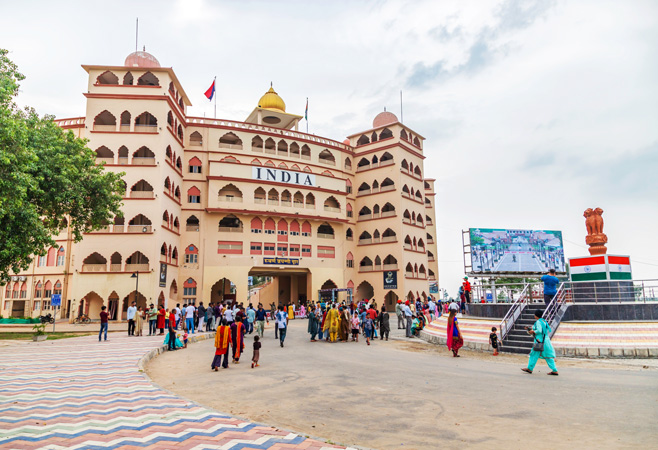
Positioned in both the Northern and Eastern Hemispheres, India ranks as the seventh-largest globally by land area
Overview of India Border Crossings
India shares land borders with seven countries, making it one of the most geographically connected nations in South Asia. These neighboring countries include:
- Pakistan (west)
- China (north and northeast)
- Nepal (north)
- Bhutan (north)
- Bangladesh (east)
- Myanmar (east)
- Afghanistan (northwest, though not accessible for civilian travel)
In total, the land borders of India are over 15,000 kilometers, which traverse deserts and mountains, river plains, and forests. However, not all parts of this huge border are open to tourism or even international traffic. There are a number of regions that are militarily sensitive, especially those bordering Pakistan and China. Others, notably in the Himalayas and some areas of the Northeast, are restricted areas or high-altitude zones which have special travel permits such as an Inner Line Permit (ILP) or Protected Area Permit (PAP).
To foreigners, traveling in and out of the country is allowed only at distinctly marked Immigration Check Posts (ICPs). Foreign travelers can only enter or exit through official Immigration Check Posts (ICPs). The illegal entry to India by means of unofficial or unauthorized entry points on the borders is a crime subject to fines, imprisonment, or deportation.
Major India Border Crossings by Country
India–Pakistan Border
The best-known border crossing between India and Pakistan is:
- Attari–Wagah Border (Punjab)
- Connects Amritsar (India) and Lahore (Pakistan)
- Open only to limited categories of travelers
- Subject to strict visa control and enhanced security checks
- Famous for the daily Wagah Border Ceremony
The Attari–Wagah crossing is the main land route between the two nations for civilians. However, travel is strictly regulated due to political sensitivities. There are strict requirements for entry through the Indian borders, such as carrying a valid visa that explicitly allows entry into the country through this line of the border. The visas do not always permit overland movement from Pakistan into India.
Visas between India and Pakistan are often restricted to specific cities listed on the visa. The level of security screening is high, and documents are examined stringently. The entry into the country overland is also subject to prior approval based on nationality and the prevailing diplomatic relations.
Due to political tension that can affect operations, the hours of the borders or entry rights can be altered without prior notice. Before planning their trip, travelers must always confirm the new requirements to enter India.
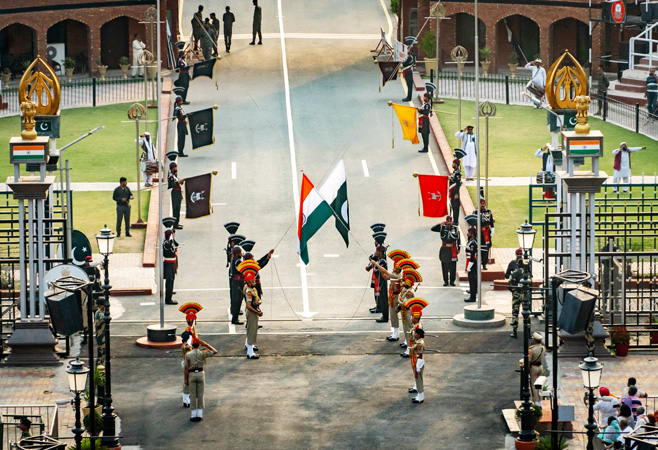
It’s becoming more and more popular – and easier – for travellers to cross the Wagah border from India to Pakistan
India–Nepal Border
There is an open border between India and Nepal with a long-standing bilateral treaty that permits the citizens of both nations to move freely. Nevertheless, this open-border policy is mostly relevant to the Indian and Nepali nationals. Foreign nationals still need to complete standard immigration procedures when crossing the border.
Popular land crossings include:
- Sunauli (Uttar Pradesh – Nepal)
- Raxaul (Bihar – Nepal)
- Panitanki (West Bengal – Nepal)
These check posts are formally recognized immigration points where foreigners are allowed to enter or leave India on legal grounds. In addition, the travelers are required to produce a valid passport and an Indian visa (or approved eVisa, where applicable at the point of entry) and also receive the appropriate entry or exit stamps.
The India-Nepal border is particularly a favorite among backpackers and overland travellers between Kathmandu and Varanasi or any other city in North India. Although the amenities provided at major crossings are usually good, they tend to be congested during the peak seasons. Processing could take time, and it is highly advised that one arrives in time and comes with printouts.
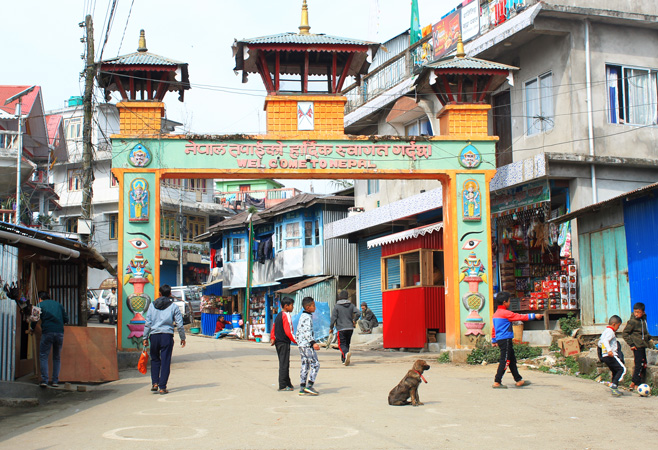
The open border between Nepal and India is due to an agreement of a bilateral Indo-Nepal treaty of peace and friendship signed in 1950
India–Bhutan Border
Main crossing:
- Jaigaon – Phuentsholing (West Bengal – Bhutan)
This is the primary and most accessible land crossing between India and Bhutan. Phuentsholing is the commercial center of Bhutan, and Jaigaon is the border town of India. Those who travel across the two countries have to go through formal immigration desks on either side.
The foreigners coming to Bhutan must seek prior visa clearance prior to arrival. Bhutan does not issue standard tourist visas on arrival without prior approval. Similarly, upon returning to India, the travelers are fully bound to follow Indian immigration rules. There is no visa-on-arrival service offered by India at this land border, and hence a genuine Indian visa must be presented or a given entry authorization.
The infrastructure at this crossing is relatively well-arranged in relation to other, more distant borders, but the processing time could be longer during the peak seasonal times.
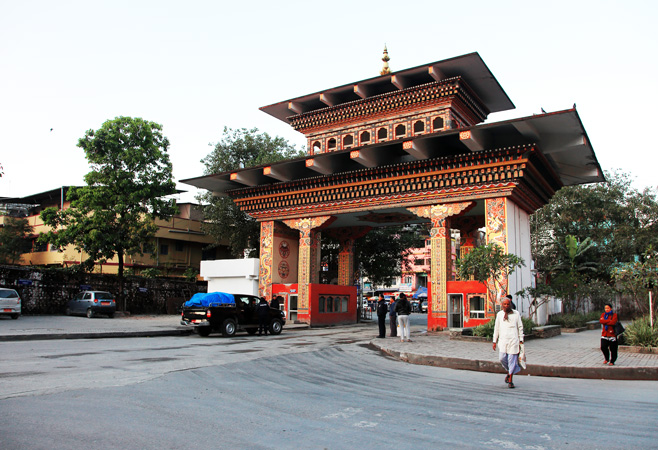
If you prefer overland travel, you can enter Bhutan through several land border crossings from India
India–Bangladesh Border
The India-Bangladesh border is considered to be one of the busiest and most business-oriented land borders in South Asia.
Major crossings include:
- Petrapole – Benapole (West Bengal)
- Dawki – Tamabil (Meghalaya)
- Agartala – Akhaura (Tripura)
Among them is the Petrapole Benapole, which is the largest land port in South Asia that has a great number of people and cargo flowing in and out daily.
The foreigners can enter through specific checkpoints provided they possess a valid Indian visa allowing them to enter the country. That being said, passengers must be aware that not every land border crossing is covered by Indian eVisas. The selected Immigration Check Post (ICP) must be verified to be recognized as an authorized entry point in the existing visa laws of India.
Waiting time has the potential to be very high because of the volume of traffic.
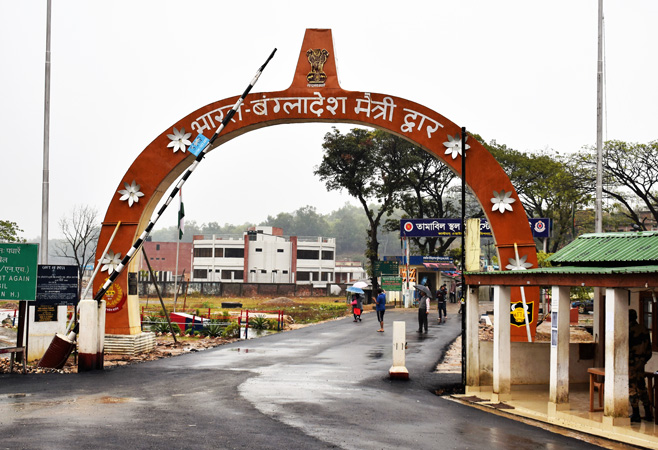
Measuring 4097 kilometers, the Bangladesh–India boundary is the fifth longest in the world and stems from the partition of British India
India–Myanmar Border
Main tourist crossing:
- Moreh (Manipur) – Tamu (Myanmar)
This is the most commonly used land crossing between India and Myanmar for civilian travelers. Nevertheless, the activities of this checkpoint have been periodically affected by security situations in northeastern India and the frontiers of Myanmar.
Before travelers make plans, they need to ensure that the area is operational. Depending on the developments in a region, entry requirements may change with minimal warning.
Also, some regions of Manipur and other states of northeast India might demand special permits to foreigners. The possession of a valid Indian visa might not be enough in the event that one travels into restricted areas.
India–China Border (Tibet Region)
Controlled crossing:
- Nathu La Pass (Sikkim)
Nathu La Pass is one of the limited officially available routes between India and the Tibet Autonomous Region of China. Nonetheless, it is not a free crossing that can be made by regular independent tourism.
The path is mainly travelled by regulated trade and small groups of pilgrims who have permission to visit the area, most especially those in the Kailash Mansarovar Yatra. Personal crossing of this border by overland is usually forbidden.
Access to Nathu La is strictly regulated due to its high altitude and sensitivity to geopolitical matters. Even approaching some of the places in Sikkim, a special permit is needed, and entry into China is hardly allowed except under organized and officially approved programs.
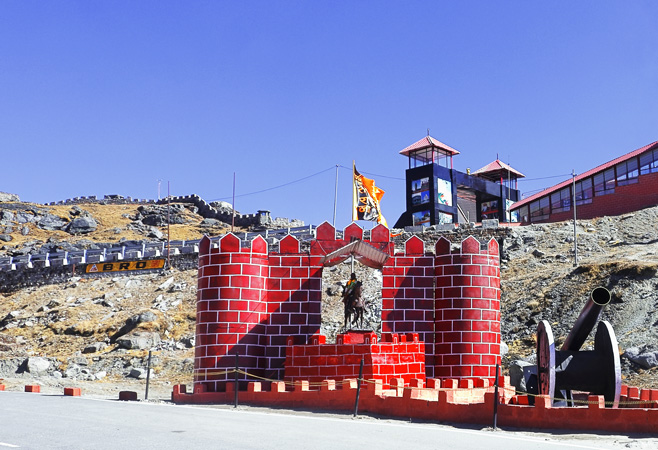
The one settled border they have is the short Sikkim / Tibet border, but only locals can cross there
India Border Entry Requirements: What Travelers Should Know
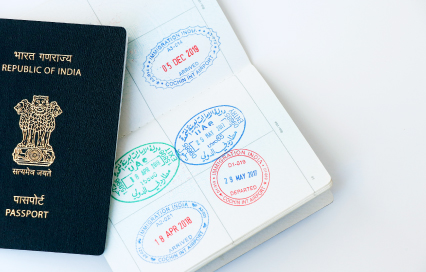
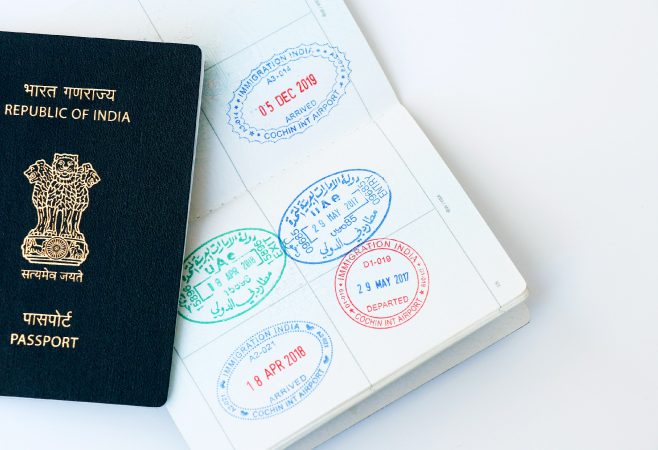
Travelers entering the country by land must understand the applicable entry requirements. Document checks and verification procedures at land borders may be more thorough than those at airport arrivals. Make sure your visa type, entry point, and number of entries match your travel plan before arrival.
1. Valid Passport
Every foreign national must hold a passport that:
- Is valid for at least six months from the date of arrival.
- Contains sufficient blank pages for entry and exit stamps.
- Is in good physical condition (not damaged or altered).
Immigration officials will not accept expired or invalid travel documents.
2. Entry Conditions and Verification
Immigration officers will review:
- Visa validity dates
- Number of permitted entries (single, double, or multiple entry)
- Approved entry points (if specified on the visa)
- Previous travel history and compliance
3. Additional Permit Requirements
In certain sensitive regions, especially in areas close to northeastern or high-altitude borders, it might be necessary for travelers to have:
- Inner Line Permit (ILP)
- Protected Area Permit (PAP)
Failure to meet India border entry requirements can lead to either refusal of entry, fines, or deportation. One should always check new rules and regulations before traveling because the policies may change due to security or diplomatic developments.
4. Visa Requirements at India Border Crossings
The eVisa program has gained popularity and is convenient for air travelers entering the country. However, the rules for land entry are more specific. The eVisa is only useful at specific checkpoints at some approved land Immigration Check Posts (ICPs).
As of 2026:
- eVisa entry through land borders is limited and depends on officially designated Immigration Check Posts. You should verify the latest approved entry points before traveling.
- Not all land borders accept eVisa entry.
- Before traveling, a traveler has to ensure that the crossing point that they intend to use is authorized for the use of an eVisa.
In case your planned land port is not mentioned among the approved eVisa entry ports, then you must obtain a regular sticker visa before travelling by using an Indian embassy or consulate. Coming to an unauthorized land border with just an eVisa can lead to refusal of entry.
Visa on Arrival at Land Borders
India generally does not offer visa-on-arrival at land borders, although limited exceptions may apply depending on nationality. Every visitor needs to receive a valid visa before arrival. There are very few exceptions, and in most cases, they only apply to certain nationalities within special bilateral agreements.
Important Reminder
Check before entering any land border of India:
- Your visa validity dates
- The amount of allowable entries.
- The list of authorized points of entry is mentioned on your visa.
All the documentation requirements are strictly enforced by the Indian immigration authorities at the land boundaries.
Travelers must enter with a visa in their passport (valid for 10 years for U.S. citizens) or an e-Tourist visa
Complete Guide to Immigration Procedures at Land Borders for First-Time Travelers
Although the procedures vary slightly by the particular checkpoint, the majority of India's land border crossings have a relatively standard immigration process. If you are crossing by land, expect the following steps:
- Show your valid visa and passport at the immigration desk.
- Sign an arrival/departure form, where necessary, by the authorities.
- Pass through biometric verification, fingerprints, and a photo.
- Submit a customs declaration when carrying restricted, high-value, or dutiable goods.
- Get an exit stamp out of the country you are leaving.
- Get an immigration stamp from Indian immigration officials.
Immigration officers will carefully review your documents to make sure you follow the provisions of the visa, such as the validity dates and the points of entry that are allowed. Unfinished paperwork or the wrong types of visas can lead to entry delays or rejection.
Processing time can vary widely depending on traffic, security checks, and the specific border. Crossings over the borders in more remote or underdeveloped areas might be processed more slowly, as there is less staffing and no infrastructure. It is highly recommended that travelers leave a lot of time and ensure that all the supporting documents are easily accessible.
Understanding Restricted and Sensitive Border Areas in India
Some areas along the international borders of India are reported as restricted or sensitive areas and need extra permission other than a normal visa. These actions are done because of security issues, strategic military significance, or the safety of the indigenous communities.
Inner Line Permit (ILP)
An Inner Line Permit (ILP) is required for travel to specific northeastern states, including:
- Arunachal Pradesh
- Nagaland
- Mizoram
- Manipur (applicable in certain cases)
The ILP system controls the access of visitors to the secure tribal territories. One should know that an ILP is distinct from an Indian visa. You have to have the ILP prior to entering these states, even with a valid visa. The applications are normally submitted online or using specific authorities in the state.
Protected Area Permit (PAP)
To visit some sensitive areas, a Protected Area Permit (PAP) might be needed by foreign nationals; these include:
- Parts of Sikkim
- Regions near the China border
- Designated zones in Ladakh
They might be denied entry without appropriate permits, irrespective of whether the visa is valid or not. The travelers should always ensure that they check permit requirements before making plans to visit the areas that are adjacent to the border.
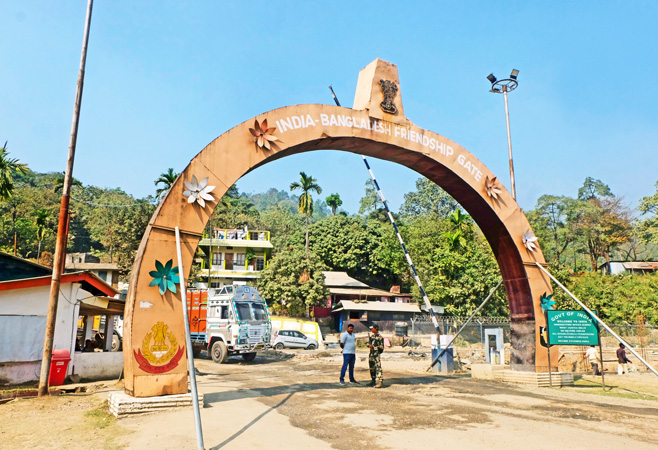
Himachal Pradesh revises security protocols to open sensitive areas along the China border in Kinnaur and Lahaul-Spiti to domestic tourists
Safety Considerations for Border Crossings in India
The experience at land border crossings is very different from international airports in regard to organization, the number of security personnel, and general comfort. The facilities can be simpler, the process can be less efficient, and the waiting conditions can be less predictable. Land border crossings are usually slower and less streamlined than airport arrivals.
Key considerations include:
- The political tensions can lead to abrupt or short-term closures.
- Rudimentary facilities, especially in remote or rural border towns.
- Long queues during the busy travel or holiday periods.
- Minimal English-speaking employees in some areas.
The local conditions are subject to rapid change in certain regions based on diplomatic affairs or security issues in the region. It is highly recommended that travelers keep a watch on official government travel warnings and local immigration news before they travel.
Extra caution is recommended at:
- The India–Pakistan border
- Certain parts of Northeastern India
- Specific India–Myanmar border zones
To be on the safe side and have an easier time processing it, do not cross late at night unless there is a necessity to do so. The daytime travel usually has better visibility, availability of staff, and access to transportation on both sides of the border.
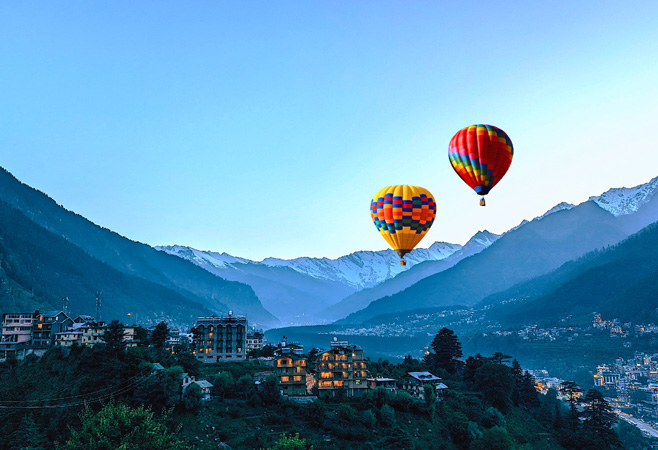
India can be overwhelming sometimes, but it's generally a safe country for travellers, and many people enjoy their time without any problems
Travel Tips for Crossing India's Borders
Travelling across the Indian borders may be a rewarding experience, especially for overland travelers visiting South Asia. Nevertheless, it is necessary to prepare to prevent any delays or complications. The land crossings can also have fewer facilities and less predictable processing time as opposed to the airports.
Plan Ahead
Before traveling, confirm that your chosen border crossing is officially open to foreign nationals. Checkpoints do not accept all eVisas, and the working hours could be different.
Carry Printed Documents
Always carry the printouts of your passport, visa permission, hotel reservations, and proof of return or onward travel. Certain border posts might possess poorly developed digital apparatus or unstable internet connectivity.
Arrive Early
The majority of land borders work at a designated time of the day. Early arrival can save you from long queues, and also, there is a possibility of you missing the closing time.
Prepare Local Currency
Exchange rate facilities across the borders may be minimal. Bring small amounts of Indian Rupees into India, or make sure that you have easy access to good change services in India.
Stay Alert and Patient
Processing times may vary according to traffic and security screenings. Be patient, do not act hastily, and follow the official instructions and not the unofficial agents providing fast-track services.
With proper planning, crossing India’s land borders can be manageable and straightforward.
Conclusion
Crossing India’s land borders can be rewarding, but rules vary by location. Always check visa validity, approved entry points, and permit requirements before traveling. At the India-Bangladesh land ports, which are usually busier than the popular India-Nepal border crossing and the highly controlled India-Pakistan checkpoint, all borders have their own protocols, security status, and documentation. Land crossings, unlike airport arrivals, take more time to be processed, verification of the entry points is more stringent, and in sensitive areas, a permit is required. Knowing the visa validity, approved Immigration Check Posts (ICPs), and any territorial travel restrictions will be required as a way of making the journey easy.
Always ensure that you read the new regulations of India border entry before deciding on your route, and make sure to check whether your type of visa is acceptable at your preferred checkpoint. Provided that you can be issued an eVisa, it can be made easier by applying online. Before departing, the travelers have the option of applying through India Immigration Services, filling out the necessary form, attaching the documents, and receiving the electronic travel authorization. Obtaining your visa in advance helps greatly to avoid the hassles of missing flights or being denied entry at the crossings of the Indian border, so that you can enjoy your vacation.
Check Out What’s In India